You are currently browsing the tag archive for the ‘Wikimedia’ tag.
In a recently published article in New Media & Society, Nicholas John (2022) reports on the decline of the use of “sharing” in the self-presention of large social network sites (SNS) over the last decade:
“there is a clear reduction in the use of the terminology of “sharing” in the self-presentation of SNSs during the decade under study. Where in the mid-2000s SNSs relied heavily on a rhetoric of sharing to promote their services, by 2020 “sharing” appears hardly at all.” (p. 2)
The world’s largest social media service Facebook is a case in point. Facebook changed the description on its landing page from “Share what’s new in your life on your Timeline” (2011) to “Connect with friends and the world around you on Facebook” (2020; on a side note, German Facebook still refers to “teilen” as of 2022).
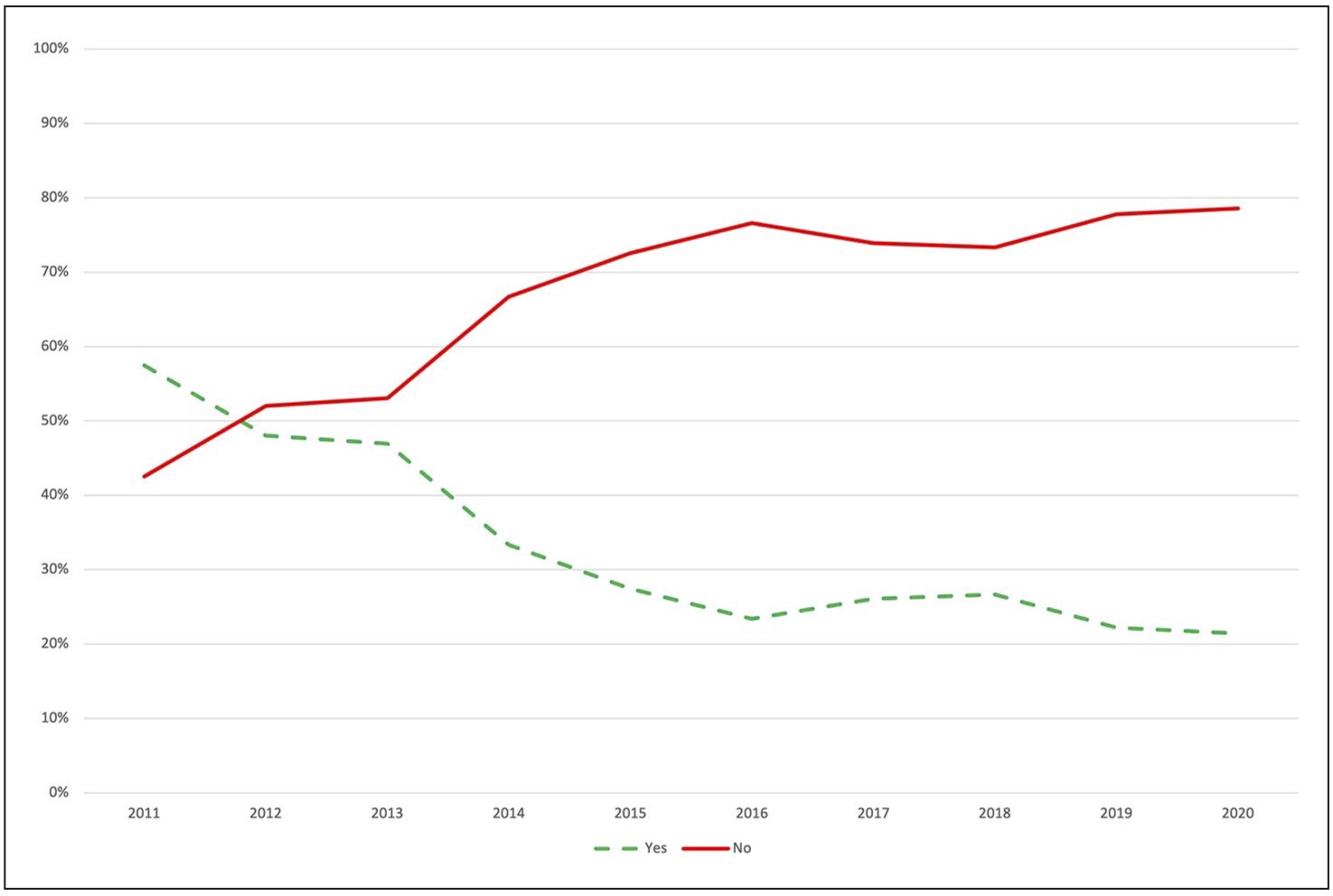
Interpreting his findings, John states that “sharing” is no longer “the constitutive activity of social media” (p. 6). I would tend to disagree with this rather bold assessment and instead argue that sharing is still constitutive for even the largest and most successful social media sites such as Instagram or TikTok. However, the activity of sharing has become so institutionalized – taken-for-granted, as neo-institutionalists would say – that emphasizing it is not necessary to clarify what is happening on social media anymore. Actually, John himself later refers to related studies that put forward such a reading, claiming that practices such as “sharing” or “remixing” have “faded in to the ‘background noise’ of mainstream culture” (p. 12, with reference to Rosa et al. 2021).
Read the rest of this entry »
Back in 2013 at the Academy of Management Annual Meeting in Orlando, Florida, Jakob Kapeller and I had received the prestigious Carolyn Dexter Best International Paper Award for an article comparing open strategy-making in the cases of Wikimedia and Creative Commons. Today, several rounds of revision later, we are proud to present the article “Open strategy-making with crowds and communities: Comparing Wikimedia and Creative Commons” being published in the journal Long Range Planning. The abstract of the paper reads as follows: Read the rest of this entry »
I’m very pleased to announce the publication of a new English-language textbook on the management of inter-organizational relations written and edited by Jörg Sydow, Gordon Müller-Seitz and myself and published by Palgrave. While several textbooks on specific topics such as strategic alliances, outsourcing and offshoring or social networks are already out there, there was to date no comprehensive textbook dealing with different forms of inter-organizational relations from a management perspective that could be used in English-language courses on managing alliances and networks.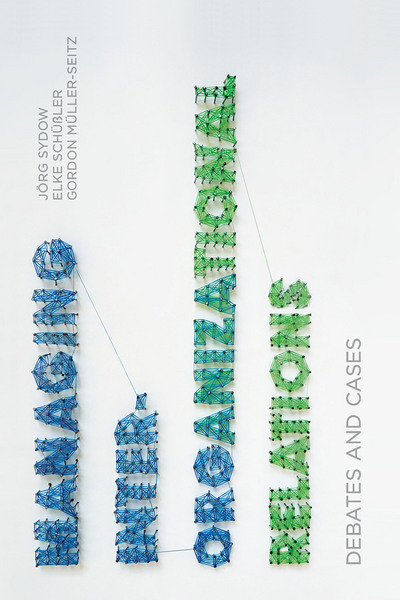
Several academically-oriented books such as the Oxford Handbook of Inter-Organizational Relations or the book Managing Dynamic Networks are useful to complement teaching, but are – in our experience – too theoretical to structure an entire course. Conversely, practitioner-oriented texts like the Manager’s Guide to Choosing and Using Collaborative Networks can only complement, but not fill an entire university course. A case collection on alliance management has been edited by the Ivey School of Business, but this collection does not include textbook chapters.
Our new book aims to include both an introduction to several forms of inter-organizational relations and the underlying academic debates as well as a collection of case studies highlighting particular managerial issues. In an effort to promote research-led teaching, all cases were developed on the basis of research projects conducted by members of the Research Group Inter-firm Networks and the Group’s international network. The book is structured in six parts, four of which comprise the main forms of inter-organizational relations that are distinguished: strategic alliances and networks, regional networks and clusters, global production and supply networks, and innovation and project networks. Especially the chapter on global production and supply networks includes a debate about transnational governance issues and discusses, for instance, the challenges associated with transnationalizing professional services or issues of accountability and liability in global production networks.
Five case studies are available for each of these network types, each focusing on particular management challenges. For strategic alliances and networks, for instance, Jörg Sydow together with Horst Findeisen, Vice President at the Star Alliance Services GmbH, wrote a case on the institutionalization of new management structures in the Star Alliance. For regional networks and clusters, Chacko Kannothra and Stephan Manning from the University of Massachusetts in Boston developed a case on the new impact sourcing trend and its implications for regional development in India. For global production and supply networks, Miriam Wilhelm from the University of Groningen presents details from her in-depth research on Toyota’s practices for managing cooperation and competition. In the chapter on innovation and project networks, Leonhard Dobusch wrote about the development of the international network organization behind Wikimedia.
Overall, this book tackles not only a border-crossing issue – management practices and challenges arising outside of hierarchical organizational boundaries – but also aims to bridge the gap between theory and practice in a new textbook format geared towards advanced bachelor, master and MBA students. The book is complemented by a companion website where teaching notes, a glossary and further informative links for each case are provided.
In a very recent study on “Paid vs. Volunteer Work in Open Source” (PDF), Dirk Riehle and others found that “about 50% of all open source software development has been paid work for many years now and that many small projects are fully paid for by companies.” However, in openly licensed projects outside of the software realm, the co-existance of paid and volunteer contributors is often considered problematic. For example, while paid coding is uncontested and vital for open source software, paid editing in Wikipedia is often seen as a danger to both the project’s neutral point of view and the motivation of unpaid contributors.
How serious the effects of Wikipedian’s skepticism towards paid editing can be was evidenced last week, when the Wikimedia Foundation dismissed Sarah Stierch, one of its most prominent employees, because of paid editing. The current issue of Wikipedia’s community newspaper Signpost is entirely devoted to
the dismissal of Sarah Stierch, whose paid-for editing activities were first revealed in a blog post. This included a screenshot of Stierch’s profile on oDesk, a global clearinghouse for the hiring and management of remote workers. The profile showed that she had been paid US$300 to author a Wikipedia page for an “individual”, along with two billed hours for a “Wikipedia Writer Editor” job that was “in progress”.
On a more general level, paid editing had already been an issue in the German Wikipedia community. Wikimedia Germany, the local Wikimedia chapter organization, had even funded a project on “Grenzen der Bezahlung” (literally: “Limits of Paying”) to discuss and evaluate issues around paid editing. The project was run by Dirk Franke, a long-standing member of the German editing community, who very recently has taken up a position with Wikimedia Germany (unrelated to paid editing). The following interview was conducted in German and Dirk Franke emphasized that he was speaking only for himself, not his new employer.

Dirk Franke (Foto: Tobias Schumann, CC-BY-SA-3.0)
You have been working on the limits of paid editing in Wikipedia in a project funded by the Wikimedia Foundation. What was your main question?
Dirk Franke: Actually, the project was funded by the German Wikimedia association, which is legally independent from the focal Wikimedia Foundation. In addition, I have not conducted the project for Wikimedia but rather in the course of a grant program, where members of the community could suggest different projects; I always understood it that way that I was conducting the project for the Wikipedia community and not so much for the chapter association.
The question was more a practical one. Paid editing is both a forseeable problem and a forseeable development. Thus, the question was, how can I encourage the community to think about the issue even before the problem is immediately around the corner and it is in fact to late?
About three months ago, I blogged about potential explanations for Wikipedia’s diversity problems (see “‘Middle-aged White Guys’“). Last weekend, a truly bordercrossing crowd gathered in Berlin to discuss strategies for addressing these problems at the first Wikimedia Diversity Conference. Due to other commitments I was not able to take part the whole time but I have enjoyed most of the sessions I was able to attend.
Since there is extensive documentation on most of the sessions available online, I will only highlight some of my personal insights:
- In her talk on “Diversifying India through outreach among women“, Netha Hussain emphasized the importance of Wikipedia Zero to increase participation in countries, where mere Internet access is not self-evident. Wikipedia Zero enables mobile access, free of data charges, to Wikipedia in developing countries via cooperations with local internet service providers. While some criticize the initiative because of it being a violation of net neutrality principles (see, for example, this mailing-list discussion), it really seems to be a great opportunity to lower access barriers in poorer countries.

As we have discussed repeatedly on this blog (e.g. “Middle-aged White Guys“), one of the most puzzling issues in analyzing Wikipedia is its continuous decline in active editors since 2007, shortly after a period of exponential growth:

Active editors (>=5 edits/month) in English language Wikipedia (Halfaker et al. 2013)
Aaron Halfaker, together with R. Stuart Geiger, Jonathan Morgan and John Riedl, has now published results of their research efforts to understand the reasons behind this editor decline in American Behavioral Scientist under the title “The Rise and Decline of an Open Collaboration Community: How Wikipedia’s reaction to sudden popularity is causing its decline” (see Preprint PDF).
One of Halfaker et al.’s core findings is that, while the proportion of desirable newcomers entering Wikipedia has not changed since 2006, the proportion of them being reverted in their first session has increased (“good_ faith & golden” refers to sub-groups of desirable newcomers): Read the rest of this entry »
Currently I am attending the Academy of Management Annual Meeting (AoM), which is located at Disney World Resort in Orlando this year and taking place at the same time as the Annual Meeting of the American Sociology Association (ASA) in New York. Christof Brandtner, an Austrian colleague working on his PhD in Stanford, commented on this fact on facebook as follows:
I suppose having a business school conference in a fantasy world is almost as ironic as a meeting on the sociology of inequality in a Hilton suite.
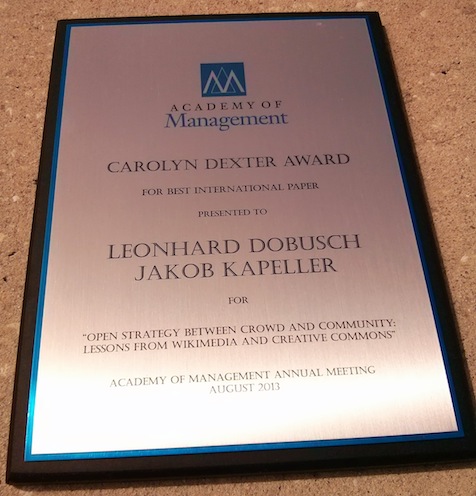
Plaque for 2013 Carolyn Dexter Best International Paper Award
While I could not agree more with him, I nevertheless would prefer being in New York like he is. On the bright side, yesterday I learnt that Jakob Kapeller and myself have received the Carolyn Dexter Best International Paper Award for our paper “Open Strategy between Crowd and Community: Lessons from Wikimedia and Creative Commons” (PDF). This is the abstract:
Based on a conception of strategy as a practice and theoretical arguments related to ‘open strategy’, this paper analyzes six cases of open strategy initiatives situated in two transnational non-profit organizations (Wikimedia and Creative Commons). With regard to openness, we look specifically at the inclusion of external actors in strategy-making. We differentiate between crowds, where external actors are isolated and dispersed, and communities, where related agents self-identify as members of the community. In all six cases, we identify the main strategic aims at stake, the scope of the open strategy tools utilized, the relevant reference groups, and the open strategy practices emerging from these setups. We thereby show how the open strategy initiatives exhibit different degrees of openness, where greater openness leads to a greater diversity of open strategy practices. Additionally, we evaluate the relation between the scope of different open strategy tools and the characteristics of the external reference group addressed by it.
The Carolyn Dexter Award is an all All-Academy-Award, which means that 24 divisions and Interest Groups nominated a paper and these papers were evaluated by three reviewers (primarily from outside the USA) with knowledge of the division domain areas. The four finalists were then comparatively assessed in a final round of blind reviews. You can imagine that Jakob and I feel quite honored. Not to speak of the great plaque we received.. ;-)
(leonhard)
„Welcome to Wikipedia, the free encyclopedia that anyone can edit.“ This inviting welcome message is placed right on top of the English Wikipedia’s main page. Similarly, the vision of the Wikimedia Foundation, the formal non-profit organization behind Wikipedia, reads as follows: „Imagine a World in which every single human being can freely share in the sum of all knowledge.“
Both these lines represent the utopia of digital inclusiveness. ‘Anyone’ should have the possibility to contribute to Wikipedia’s quest for collecting the world’s knowledge. ‘Every single human being’ shall take part in this digital knowledge exchange. In Wikipedia’s early years, critics questioned whether this radical openness allowed for a high-quality encyclopedia to emerge. The main concern was how quality and neutrality of the Wikipedia could be preserved when anyone can change, delete or amend anything at any time (in 2005, for example, the Guardian asked “Can you trust Wikipedia?“).
Responding to these questions, Jim Giles compared in a Nature article (2005) Wikipedia and the renowned Encyclopedia Britannica and found a similar number of errors in both encyclopedias; more recent studies confirm these results with different methodologies (see, for example, Rodrigues 2013). Furthermore, Wikipedia’s quality management became much more sophisticated over the years, for example by introducing “sighted versions” checked by experienced Wikipedians. And even though there are still regularly reports on manipulated or wrong articles in Wikipedia, the end of print encyclopedias nevertheless made it the undisputed winner in the battle of encyclopedias. Today it is hardly possible to make an online search without finding a Wikipedia reference prominently placed in the results list. Wikipedia has effectively become the central directory of world’s knowledge. Read the rest of this entry »
 Earlier this year, the board of the Wikimedia Foundation, the organization behind the free onlince encyclopedia Wikipedia, decided to substantially reform its governance structures (see “Contours of Future Wikimedia Governance: More Centralized, More Diverse“). Two issues were key in this reform: allowing for greater diversity of potential models of affiliation, in addition to the established model of national chapter organizations, and centralizing fund raising and dissemination in a newly formed body termed “Funds Dissemination Committee” (FDC).
Over the last two months, Wikimedia moved forward in both regards. First, the former “Chapters Committee” was officially transformed into the “Affiliations Committee” for making recommendations to the Foundation’s Board of Trustees on the recognition and approval of Wikimedia movement affiliates. Such affiliates need not only be traditional chapter organizations but can also be thematic organizations or user groups, as is explained on Meta-Wiki:
While chapters support and promote the Wikimedia projects in a specified geographical region or country (for example, Wikimedia Argentina), thematic organisations will support and promote the Wikimedia projects in a specified thematic field or focus area (for example, Wikipedia Astrophysics Editors). User groups, on the other hand, will be loose associations of local volunteers, highly variable, but still within the overall mission of supporting and promoting the Wikimedia projects (for example, a WikiProject Stroopwaffle).
The Affiliations committee has already developed guidelines for the creation of each of these three potential affiliate models (see, for example, the “Step-by-step Thematic Organization creation guide“). Interestingly, the previously discussed idea of “Movement Partners” – like-minded organizations that actively support the Wikimedia movement’s work – has not been implemented so far.
Second, on November 15, the FDC published its first recommendation to the board of how to allocate funds to eligible entities within the Wikimedia Movement, i.e. mainly Wikimedia chapters. Several points in this recommendation are remarkable:
- The proposal of Australian chapter, while acknowledging its pioneering role in working with Galleries, Libraries, Archives and Museums (GLAM), was rejected entirely due to “compliance aspects of previous grants, and gaps in the present proposal with regard to alignment and metrics”. Also in the case of the French chapter, the FDC recommends to allot only $94,000 instead of the $961,109 that were applied for. If the FDC wanted to state examples, it did; however, the FDC left a door open in allowing both chapters to apply again in a second round of proposals.
- The largest chunk of funds – with about $4.5 million more than one third of the total amount of $11.14 million – goes to the focal Wikimedia Foundation Headquarters, with one FDC member opposing the decision. Seemingly, this FDC decision was the only one that was not made unanimously. Moreover, the FDC did allot exactly the amount of funds the Wikimedia Foundation had applied for, while in many other cases it reduced the amounts.
- In the case of the oldest and by far largest chapter organization in Germany, the FDC recommends full funding, less Wikimedia Chapters Association (WCA) membership fees, leading to a total amount of to $1.79 million. Eliminating membership fees for the WCA is a delicate decision, since the WCA was founded by Wikimedia Chapters in the run-up to the establishment of the FDC as a counterweight to the Wikimedia Foundation – even though both sides publicly assert each other of their reciprocal support. Explaining the elimination of WCA membership fees, the FDC argues that the WCA “is not yet a legally incorporated entity, and may apply for FDC funding for start-up staffing and other expenses.”
The recommendations by the FDC are set to be approved by the Board of Trustees by December 15, 2012.
As far as the community of Wikipedians is concerned, both these recent developments in terms of broadening the scope of potential affiliates and of reforming funds dissemination have not dampened calls for further democratizing the formal Wikimedia organization. On Meta-Wiki, a lenghty page is devoted solely to discussing the different avenues for Democratizing the Wikimedia Foundation. Topics in the current “initial brainstorming” phase include the ‘Board Mystery‘ (“The board is a very mysteriously functioning body, nobody knows how it works or what it does.”), term limits for board members (“They can be limited to 2-3 terms, even if re-elected.”), and referenda on movement-wide decisions (“Do we need to improve or clarify the process for global votes?”).
Probably, the current changes in Wikimedia governance let the genie of governance reform out of the bottle. Wikimedia’s organizational structures have been revealed as contingent and open for change. I think it is safe to predict that the establishment of the Affiliations Committee and the FDC will have been just the beginning of a series of governance changes in the near future.
(leonhard)
Today I learnt from the blog of Wikimedia Germany about plans to merge the two wiki-based collaborative travel guide projects Wikitravel and WikiVoyage into a new Wikimedia project such as Wikipedia or Wiktionary, governed by the Wikimedia Foundation. Denis Barthel from Wikimedia Germany describes the history of the two projects as follows (my translation):
Wikitravel.org went live in July 2003 with the goal to collaboratively create a travel guide under an open license. Today, Wikitravel features 19 different language versions with up to 26.000 travel guides. In 2006 the founders decided to sell the trademark “Wikitravel” to the firm Internetbrands to put Wikitravel on more solid grounds. Internetbrands provided for hosting and guaranteed independence of the community with regard to contents. First problems arose when Internetbrands decided to run ads on the site. This decision led to a debate on principles and eventually to a fork: the German community refused to work in a commercial environment. As a result, WikiVoyage emerged, carried by a German-based association. WikiVoyage hosts the bigger stock of German articles (~12.000 compared to ~5.000 at Wikitravel) and a very active and well organized community. Furthermore, there is an Italian version with a shared database for images similar to Wikimedia Commons and “Locations”, some kind of WikiData for locations.
Currently, the Wikimedia Communities are debating whether accepting a merger of these two communities as a new Wikimedia project is both feasible and desirable. And while the majority seems to support the inclusion of the newly merged project into the family of Wikimedia projects, several concerns are raised: Read the rest of this entry »

 governancexborders.com
