You are currently browsing the category archive for the ‘Governance of markets’ category.
Florian Überbacher (Montpellier Business School), Elke Schüßler (Leuphana University) and Arno Kourula (University of Amsterdam Business School) are calling for submissions to their 2024 EGOS Subtheme on “Regulating Organizations: Re-Examining the Intersections between States and Businesses”.
In view of the grand environmental, political, and social problems we are facing, we would – perhaps more urgently than ever – need a functioning regulatory and legal environment that motivates companies contribute towards making our world more sustainable. But how should such a ‘better’ and ‘smarter’ regulatory system look like and how should regulatory processes be organized?
To address such questions, and connect organizational scholarship with ongoing debates on (trans)national governance and regulation, the aim of this subtheme is to invite scholarship that seeks to integrate, extend, or contradict regulatory and organizational research in novel ways.
The deadline for the submission of short papers is January 9th, 2024.
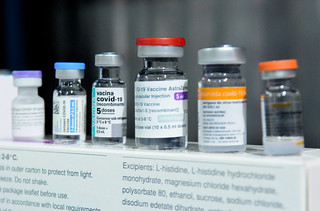
As we have all experienced recently, to prevent pandemic outbreaks or mitigate an evolving pandemic crisis, it is of utmost importance to guarantee timely and global access to safe and effective vaccines. Through their pre-print, Milena Leybold (University of Innsbruck) and Konstantin Hondros (University of Duisburg-Essen) make a step towards opening a debate on “Increasing Vaccine Access in a Shorter Time. Alternative Regulatory Frameworks in Response to Pandemics.”

In the article “’We Can’t Compete on Human Rights’: Creating Market-Protected Spaces to Institutionalize the Emerging Logic of Responsible Management“, which has just come out at the Academy of Management Journal, Nora Lohmeyer, Sarah Ashwin and myself argue that the protection of labor and environmental standards in the global economy relies on the construction of “market-protected spaces”, institutionally bound spaces that suspend the dominance of the market logic on selected issues based on a binding regulatory infrastructure that allows prioritizing responsible management practices. This conclusion is based on years-long research on the consequences of the deadly Rana Plaza accident in Bangladesh in which thousands of garment workers were killed or injured. Our research shows that voluntary corporate social responsibility (CSR) initiatives are not enough to address systemic, complex social or environmental problems in the global economy. We agree with De Bakker, Matten, Spence, and Wickert (2020), who
Read the rest of this entry »see an urgent need to address an “elephant in the room” of corporate social responsibility (CSR) research: the systemic constraints exerted by the current economic paradigm that might not be reconcilable with responsible business conduct.
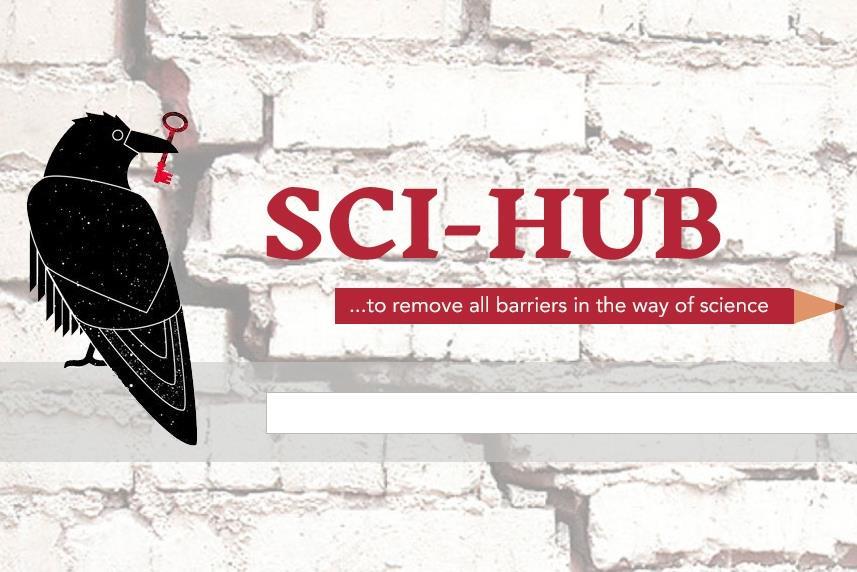
Five years have passed since universities, universities of applied sciences and research institutions in Germany initiated terminating their contracts with the world’s largest scientific publisher, Elsevier (see also “‘The Garbage Strike Test’ Put to A Test in Germany: Already One Month Without Elsevier”). There are now almost 200 institutions that no longer have a contract and thus no direct access to Elsevier journals. The reason for this wave of cancellations was a combination of exorbitant price (increases) and the publisher’s refusal to switch to new open access publishing models.
However, it is precisely such new, quasi Germany-wide Open Access agreements that have been signed with the two next largest scientific publishing houses, Wiley (2019) and Springer Nature (2020), as part of „Project DEAL“. These agreements provide for all participating universities and research institutions to be granted access to the publishers‘ journals (archives) and for all articles written by their researchers to be freely and permanently accessible on the Internet worldwide. In turn, Publish & Read fees are charged for each published article. The contracts have been published in full on the web, including conditions (see contract with SpringerNature and contract with Wiley).
Read the rest of this entry »Today, concerns about academics’ contribution to the future of our planet are growing. While climate scientists have long recognized that their scholarly lifestyle is part of the problem and have developed various kinds of solutions, management scholars are just beginning to more extensively reflect not just about their research agendas, but about their own behaviour as scholars. Management scholars’ environmental impact is not the only issue at stake. Rather, there are problems with a loss of meaningfulness in research work driven forward by rankings, not content, and with a rise of scientific misconduct. Arguably, these issues are related to the ways in which the scholarly community is organized.
The research network “Grand Challenges and New Forms of Organizing”, funded by the German Research Foundation, has taken it as its mission to unpack the reciprocal relationship between societal grand challenges and new forms of organizing. In the spirit of this research agenda, the network has also started to reflect about the challenge of making scholarship itself more sustainable again. During one of its workshops held in March 2019, the network formed working groups around four areas of sustainable scholarship that can be seen as highly interrelated and complementary, thus creating difficulties for change:
- How can we reduce our flying in the light of demands placed on visibility in international research communities?
- How can we make academic careers more sustainable and meaningful?
- Is the strong focus on theoretical novelty by our leading journals itself an unsustainable practice?
- What are alternatives to supporting the unsustainable business model of proprietary publishing?
Environmental impact of scholars Read the rest of this entry »
“[T]he promoters of micro-credits promise to deliver us from poverty and emancipate women. In fact, it is the opposite that happens: we find ourselves trapped in a spiral of over indebtedness, launching infeasible micro-projects that, instead of keeping our heads above water, push us deeper into poverty, stress, humiliation and violence. We are at the end of our tether!
This is part of a declaration recently issued by women from fourteen countries, gathered in a meeting of African activists in Bamako, Mali, in November. Read the rest of this entry »
The World Bank’s previously public data on microfinance and financial inclusion has recently been locked away behind a paywall. It’s hard to figure out why. However, it raises larger questions about the Bank’s strategies for microfinance and knowledge more broadly.
(This is a background piece to an article published on the IDS blog.)
Since the 1990s, the World Bank has sought to present itself as not only as a lender, but also a global “Knowledge Bank” that collects and provides knowledge as a global public good. It has garnered some praise, and perhaps more criticism, for ostensibly seeking to monopolise knowledge about development. In 2012, the Independent Evaluation Group concluded the objective of creating a global Knowledge Bank had not been achieved, criticising a lack of uptake of knowledge within the Bank and “intellectual silos”.
So how about intellectual vaults, with knowledge securely locked away? Turning public monopolies into private (or pseudo-private) monopolies; now that doesn’t sound like something the World Bank would be in favour of, does it? It’s precisely what happened with the World Bank’s microfinance data platform earlier this month.
The MIX (also known as “Microfinance Information Exchange”, or “Mixmarket.org”) was created by the World Bank’s in-house-but-arms-length microfinance governing body, CGAP, to improve the transparency of the microfinance industry. Since 2002, the MIX (whose connections to the World Bank are not made very clear, but its headquarters are across the street) has collected data about the global microfinance sector, packaged primarily to cater to investment decision-makers.
The MIX’s “.org” suffix denotes its claim to serve the greater good. The data were made available on-line. Anyone with an interest in microfinance could access it: “a big win for open data in international development”.
Get the “public” data – for upwards of $486
Those days, it seems, are over. All the data which were previously available for downloading and (usually after some cleaning) analysing in a spreadsheet are now behind a paywall. What used to be a “global public good” is now priced at at least $486 a year – clearly too much for most students or researchers, let alone those from developing countries.

(Image: screenshot from themix.org)
Yesterday, the papal encyclical “Laudato Sii” was finally released. Environmentally engaged members of the Roman Catholic Church have awaited this day with cautious excitement since January 2014, when it was first announced that Pope Francis prepares such a document on “the ecology of mankind”. Over the last months, the event has also received remarkable attention in the wider public all over the globe.
The release of the encyclical exemplifies how religious actors can influence regulatory processes. Short-term, it may affect current political events with judgments about concrete political choices, influencing their (il)legitimacy. For instance, the papal encyclical calls the final document of the Conference of the United Nations on Sustainable Development in Rio de Janeiro in 2012, “ineffective”. Further,
the strategy of buying and selling “carbon credits” can lead to a new form of speculation which would not help reduce the emission of polluting gases worldwide. […] it may simply become a ploy which permits maintaining the excessive consumption of some countries and sectors (Laudato Sii).
The release may also create a new momentum of debate and hope in the year of the 21st Conference of the Parties (COP21) to the United Nations Framework Convention on Climate Change (UNFCCC) and the 11th session of the Meeting of the Parties (CMP11) to the 1997 Kyoto Protocol in Paris during which parties aim for a new, legally binding agreement.
Long-term, it is a significant theological document meant to give direction to contemporary Catholicism and 1.2 billion Catholics around the world. Even if we cannot know how it will be interpreted in thirty years from now, its effect is likely to last longer than the next international climate agreement. But despite or especially because of its character, it enfolds its dynamic only with its reception by an audience willing and eager to engage with it. At least three factors have helped to turn the publication of the encyclical into a widely received event which is likely to deserve all the hope that is attached to it.
 About two years ago I blogged about zombie provisions of the failed ACTA treaty, which resurfaced in other treaties such the the“Comprehensive Economic and Trade Agreement” (CETA). In the new multingual Eutopia magazine I have now published an article on the currently debated Transatlantic Trade and Investment Partnership (TTIP):
The dispute over the planned TTIP transatlantic free trade agreement between the European Union and the United States goes far beyond the treaty itself, the reason being the tradition in which TTIP is grounded.
It is merely the most recent acronym in a constantly expanding family of abbreviations, its best known members including GATT, TRIPS, GATS, MAI, ACTA, CETA and TPP*.
[…]
In the series “algorithm regulation”, we discuss the implications of the growing importance of technological algorithms as a means of regulation in the digital realm.

Facebooks Edge Rank Algorithm (Source: http://goo.gl/zTrTbe)
In a recent issue of the Proceedings of the National Academy of Sciences of the USA (PNAS), Adam Kramer and others published an article on “Experimental evidence of massive-scale emotional contagion through social networks” with data derived from the world’s largest social network Facebook. The researchers was given the permission to manipulate the Facebook newsfeed in order to test how differences in terms of emotional direction of postings, i.e. more “happier” or more “sadder” updates, impact on people’s status updates. The study delivered two main results: First, emotions are “contagious” in that more happy postings inspired more happy postings and vice versa. Second, fewer emotional posts (in either direction) reduces posting frequency of Facebook users.
The publication of these results has incited furious debates with regard to research ethics, mainly criticizing that Facebook should have asked users to (more) explicitely consent in taking part in such an experiment. Susan Fiske, the Princeton University psychology professor who edited the study for publication, is quoted in an Atlantic article subtitled “It was probably legal. But was it ethical?” as follows:
“I was concerned,” Fiske told The Atlantic, “until I queried the authors and they said their local institutional review board had approved it—and apparently on the grounds that Facebook apparently manipulates people’s News Feeds all the time.”
Over at orgtheory, Elizabeth Popp Berman agrees that “the whole idea is creepy” but also argues that Read the rest of this entry »

 governancexborders.com
