While the recent Google Books ruling by the US Second Circuit has once again proven how the US copyright system is – thanks to its fair use provision – more flexible and adaptable to digital challenges than its European counterpart, in other fields the legal situation is very similar on both sides of the Atlantic. One such field is digital sampling in music, which is the topic of the book “Creative License: The Law and Culture of Digital Sampling” by McLeod and DiCola (2011, Duke University Press).

Cover of the Book

Cover of the Book “Creative License” by Kembrey McLeod and Peter DiCola (2011, Duke University Press)

Sampling is a comparably recent practice where parts of sound recordings are reused in creating new works. According to McLeod and DiCola, “a good appropriated sample has […] a good quality of its own, and it has a strong reference that evokes cultural resonance as well” (p. 99, emphasis added). The latter of the two, cultural resonance, not only adds an additional meta-layer of cultural reference to a song but is also the main reason for legal calamities associated with sampling. As with remix practices more generally, a core characteristic of sampling is that the old remains visible within the new and is not hidden behind a (more or less transparent) veil of originality.

However, this visibility of creative raw materials – that is, samples of previous works – is considered as some form of creative “short-cut” by the courts, which require samplers to clear each and every sample they use, as small and tiny the portion of sound may be. McLeod and DiCola:

Bridgeport Music v. Dimension Films held that no de minimis exception applied to sound recordings. […] [T]he bottom line was, as the ruling stated, ‘Get a license or do not sample.’” (pp. 139, 141)

In Germany, the decision “Metall auf Metall” by Germany’s highest court had identical consequences. The detrimental effects of such a restrictive application of current copyright to the artistic practice of sampling are the reason why sampling-based creativity suffers from permission culture.

Read the rest of this entry »

Chapter from the Book "Public Domain", edited by Dominik Landwehr

Chapter from the Book “Public Domain“, edited by Dominik Landwehr

Remixing has long since become a part of our daily lives. Today, when amateurs and artists work with images, texts and music, they are inspired and free. However, in many cases copyright law gets in their way.

During what turned out to be the not-so-hot summer of 2014, a wave of ice water crashed through the internet. Throughout the world, people were filming themselves as they poured buckets of cold water over their heads, sharing the results in social networks and then nominating their friends to perform this strange ritual, which was quickly dubbed the Ice Bucket Challenge. It was a digital chain letter of sorts that spread like wildfire through the internet. The whole thing was actually a call for donations to the ALS Association. ALS is a rare nerve disease.

But this is only a partial description of the phenomenon. In contrast to a chain letter, each ice water performance also had an individual note; it was a continuation of the general motif. In this sense, the Ice Bucket Challenge is also prototypical for digital remix culture.

An example of this remix character is a version of the Ice Bucket Challenge that is circulating in the internet: it is based on the Edvard Munch’s famous picture “The Scream”. The internet picture is a remix and lives off of an interaction between the old and the new. Without a clearly recognizable reference to Edvard Munch’s series of paintings “The Scream”, it would be as inexplicable as it would be without any previous knowledge of the Ice Bucket Challenge phenomenon. This is the essence of a remix: the old, original work remains identifiable in the new work.

Ice-Bucket-Challenge version of Edvard Munch's "Scream", author unknown (via).

Ice-Bucket-Challenge version of Edvard Munch’s “Scream”, author unknown (via).

The example of the Ice Bucket Challenge is revealing. It illustrates how the internet and digital technologies have contributed to the rise in broadly disseminated – not to mention democratized – remix culture. As a mass phenomenon, this new remix culture is characterized by numerous contradictions. Read the rest of this entry »

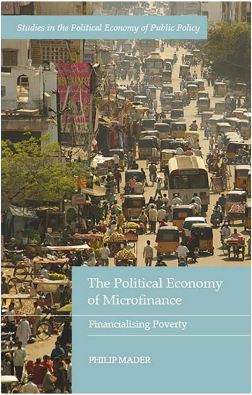
The Nobel Peace Prize awarded to Muhammad Yunus and the Grameen Bank in 2006 went practically unquestioned. But since then, particularly over the last years, a public pro-microfinance/anti-microfinance debate has taken a clear shape with well-known lines of argument running both-ways. Many studies have asked: “Does microfinance work?”. And some have more pointedly asked: “Why doesn’t microfinance work?“.

New questions are needed if new answers are to be generated. The Political Economy of Microfinance: Financializing Poverty offers both. Starting from the question “What does microfinance work at – and how?”, it offers new insights into which have particular significance in light of the continually unresolved issues around poverty impact. More than 35 years into the microfinance experiment, the fact is we still don’t know whether microfinance works at reducing poverty – and there are serious reasons to doubt that it does. What we do know (or can know), however, the book argues, is that microfinance works at financialising poverty.

The Political Economy of Microfinance Financialising Poverty

Read the rest of this entry »

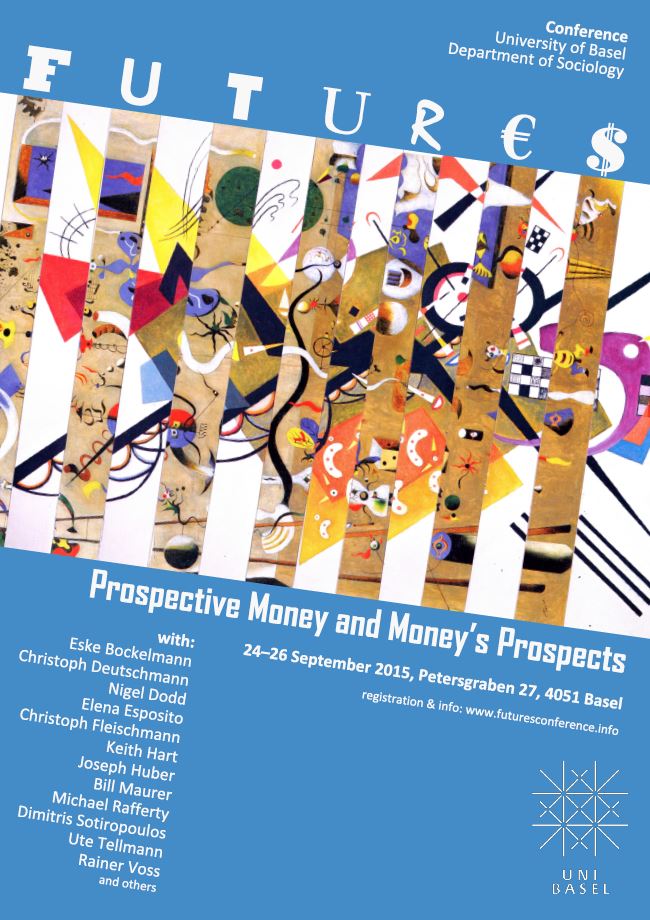
The Conference FUTURE€$ – Prospective Money and Money’s Prospects, which I’m organising together with Axel Paul and Cornelius Moriz, will take place from 24-26 September 2015 at the University of Basel, Switzerland.

Futures posterIn February we circulated a Call for Papers that generated an overwhelming response in terms of cutting-edge submissions, from which we could select the very best and put together a set of panels on the nature of money, the Euro crisis, and new monetary technologies. This comes in addition to a stream of talks from leading scholars of money worldwide. A main highlight of the conference is the evening roundtable on Friday 25 September, which assembes four prominent panelists (Christoph Fleischmann, Keith Hart, Dimitris Sotiropoulos, and Rainer Voss) to reflect on the problematic role played by money in our present political-economic juncture.

The conference will bring together multidisciplinary and exploratory perspectives on the nature(s) and future(s) of money. With this list of speakers (from academia, practice, activism and media), it may well be the academic event of the year in its field:

Read the rest of this entry »

In the end, nothing happened. When the European parliament adopted a compromise version of MEP Julia Reda’s evaluation report of the EU copyright directive, the attempt of MEP Jean-Marie Cavada to restrict the right to publish pictures of buildings and artworks permanently installed in public places (“freedom of panorama”) was voted down by a huge margin. The majority that had supported the Cavada amendment in the legal affairs committee vanished under a storm of protest, spearheaded by Wikipedians fighting for their right to include pictures of buildings and artworks in their free encyclopedia.

However, while the final version of the report did not suggest restricting freedom of panorama, it did not include a specific provision to protect it, either. Instead, member countries would still be free in whether and how to implement such a limitation into their respective national copyright laws. In a way, this outcome is a typical example of the widespread copyright extremism in Europe, which blocks even the most sensible and moderate copyright reform proposals.

The overall spectrum of opinions in current copyright debates ranges from abolitionism, that is, proposals to discard copyright altogether, to copyright extremism on the other side. Copyright abolitionism is a position sparsely mentioned in regulatory conversations. While authors Joost Smiers and Marieke van Schindel, for instance, have managed to create some buzz around their book “No Copyright”, the attention was only short-lived and the discussion left no real lasting mark on the conversation overall. And abolitionist positions brought forward by libertarian researchers such as Michele Boldrin, David K. Levine and their colleagues have only played a very marginal role in scientific discourse, as well.

However, we observe that rhetoric around ratcheting up extreme copyright protections plays a major role in the mainstream of regulatory conversations around copyright, while rarely recognized and called out as extremism. Rather, even the most far reaching positions are considered perfectly legitimate when brought forward in committee hearings, policy papers or campaigns. In a way, current copyright discourse is heavily skewed towards the side of copyright extremism, which makes any moderate and balanced reform of copyright laws difficult, if not impossible. Taking a closer look at the relentless rhetoric of copyright extremism might therefore help to identify and address this problem.

Read the rest of this entry »

Excerpt from “The Political Economy of Microfinance: Financializing Poverty”, Chapter 2, A Genealogy of Microfinance. (see other excerpts here)

Microcredit allowed the well-institutionalized tool of credit programming to remain inside mainstream development policy, despite a diminished role for governments, and despite the fall from grace of subsidies. In reality, microcredit programming merely shifted the subsidies and state involvement one level “up”: no longer were loans to the poor subsidized and publicly supported; now the organizations which lent to the poor were subsidized and supported.


Historical growth of the microfinance industry

Sources: World Bank (2001); Maes/Reed (2012); MIX (2013) = Basic MIX MFI Data Set, as of 26 December 2013.

Reliable data on microfinance from before 2000 are very rare. In the mid-1990s the World Bank surveyed the sector and counted over 900 “institutions which offer microfinancial services” (around 735 of them being “proper” microfinance institutions), each serving at least 1,000 clients. The list included seven large banks and one NGO. The survey tallied around $5 billion in outstanding loans. However, the vast majority of MFIs were recently founded NGOs which placed little, if any, emphasis on savings and received over two-thirds of their funding from donors (see Figure below). This group was fast-growing. The World Bank (2001: 4) noted: “Much of the impetus for this growth comes from donor organizations and NGOs embracing microfinance as the latest tool in development and poverty reduction. Due to the increasing availability of donor funds, microfinance institutions have grown rapidly.”

Standardizing microfinance, financially

The World Bank’s decision to support microfinance primarily through its International Finance Corporation (IFC) arm, whose purpose is “financing private sector investment, mobilizing capital in the international financial markets, and providing advisory services” (IFC 2011), affected which type of organizational model would become dominant: MFIs that were willing and able to manage funds that were channelled from mainstream financial markets were favoured. Read the rest of this entry »

Excerpt from “The Political Economy of Microfinance: Financializing Poverty”, Chapter 6, At the Crossroads of Development and Finance. (see other excerpts here)

Re-evaluating microfinance

Although definitive policy prescriptions go beyond the scope and intent of this book – as a political economy of microfinance, not a policy appraisal – I hope that it may contribute to a reconsideration of microfinance… Putting the current state of impact evidence together with my analysis of microfinance as financializing poverty begs the question: If we have no proof that microfinance reduces poverty, but we do know that it extracts labour power from the poor, why should we continue with microfinance? And since the research presented here draws into question the hopes placed in, and the policy attention devoted to, microfinance as a developmental tool, what practical lessons can be drawn?

Enthusiasts believe that, in the case of the microfinancial industry, the interests of capital owners, financial intermediaries and the global poor can be aligned. That the poor see a share of their labour power extracted by a new financial industry might well be justifiable (in terms of social policy), if measurable, demonstrable benefits to the poor were to systematically arise.[1] But the fact that, on the one hand, systematic benefits for the poor are difficult if not impossible to demonstrate after more than three decades (in studies whose designs aimed to find these benefits, and whose frame of comparison was that of doing nothing at all), while on the other hand, microfinance does demonstrably impose systematic costs on the poor, makes the arguments put forward in its defence look increasingly questionable.

Furthermore, instead of purging them, the microfinancial industry has come with many of the trappings of “normal” finance: excesses, crises, bailouts, overindebtedness, fraud, sale on false premises, collusion, predatory lending, abusive practices, irrationality, speculation and greed. These aspects of the credit relation constructed by microfinance should also be considered in any overall appraisal.

One perfectly logical option for policy-makers would be to discontinue their direct and indirect support (including financial support, logistical support and conducive policy changes) for microfinance systems, until the day their beneficence can be proven. Another logical possibility would be to regulate the sector in such a way as to ensure that the interests of investors and MFIs cannot supersede those of their clients. Yet the sector remains deeply averse to such regulation with teeth – such as interest rate caps or loan usage restrictions – and will likely strongly resist it by employing arguments that emphasize poor people’s right to choose between different credit sources and modalities which would be curtailed by regulation.

Read the rest of this entry »

Yesterday, the papal encyclical “Laudato Sii” was finally released. Environmentally engaged members of the Roman Catholic Church have awaited this day with cautious excitement since January 2014, when it was first announced that Pope Francis prepares such a document on “the ecology of mankind”. Over the last months, the event has also received remarkable attention in the wider public all over the globe.

The release of the encyclical exemplifies how religious actors can influence regulatory processes. Short-term, it may affect current political events with judgments about concrete political choices, influencing their (il)legitimacy. For instance, the papal encyclical calls the final document of the Conference of the United Nations on Sustainable Development in Rio de Janeiro in 2012, “ineffective”. Further,

the strategy of buying and selling “carbon credits” can lead to a new form of speculation which would not help reduce the emission of polluting gases worldwide. […] it may simply become a ploy which permits maintaining the excessive consumption of some countries and sectors (Laudato Sii).

The release may also create a new momentum of debate and hope in the year of the 21st Conference of the Parties (COP21) to the United Nations Framework Convention on Climate Change (UNFCCC) and the 11th session of the Meeting of the Parties (CMP11) to the 1997 Kyoto Protocol in Paris during which parties aim for a new, legally binding agreement.

Long-term, it is a significant theological document meant to give direction to contemporary Catholicism and 1.2 billion Catholics around the world. Even if we cannot know how it will be interpreted in thirty years from now, its effect is likely to last longer than the next international climate agreement. But despite or especially because of its character, it enfolds its dynamic only with its reception by an audience willing and eager to engage with it. At least three factors have helped to turn the publication of the encyclical into a widely received event which is likely to deserve all the hope that is attached to it.

Read the rest of this entry »

Excerpt from “The Political Economy of Microfinance: Financializing Poverty”, Chapter 2, A Genealogy of Microfinance.

Two basic types of story are commonly told about the origins of modern microfinance. One is the underhistoricized version, whereby Dr Muhammad Yunus (and/or a handful of other pioneers) “invented” or “discovered” it: “The modern microfinance movement began in Bangladesh in 1977, as an experiment by economics professor Muhammad Yunus … Over the next three decades, the model he established became widely accepted and replicated in other countries as a way to fight poverty. Microfinance spread around the world and earned Yunus a Nobel Prize in 2006” (Wharton Business School 2011). In this and similar tales, before the 1970s, microfinance has no meaningful history.

The overhistoricized version meanwhile draws parallels and connections with various prior credit systems and financial interventions, portraying microfinance as part of a long lineage of poverty-alleviation programmes through credit. For instance, “modern microfinance did not arise de novo thirty-five years ago. The ideas within it are ancient, and their modern embodiments descend directly from older successes” (Roodman 2012a: 38). Here, today’s microfinance sector is all history, and merely the temporary pinnacle of a long, quasinatural evolution.

Both stories are unsatisfactory, not least because they downplay (or ignore) the political-economic context of microfinance; they overlook the “visible hand” of the state in its emergence; they fail to show how microfinance arose out of particular historical circumstances (neither as sudden discovery nor as revival of ancient ideas); above all they are blind to the insecurities, uncertainties and contingencies which shaped today’s microfinance sector. Microfinance was neither a sudden and miraculous discovery nor a historical necessity.

Read the rest of this entry »

Excerpt from “The Political Economy of Microfinance: Financializing Poverty”, Chapter 3, The Financialization of Poverty. (see other excerpts here)

Microfinance … performs both financial intermediation and financial innovation … it intermediates across time and space by creating entitlement relationships that reach from now into the future and from capital providers to borrowers. It innovates in generating new financial technologies which bring fresh borrowers into connection with capital-providing actors who can pursue not only financial goals, such as rapid turnover and growth of capital via above-market interest rates, but even quasi-charitable ideals.

The microfinance industry has developed (and continues to develop) technical means for channelling substantial quanta of capital directly to people living without collateral or assets at the bottom of the global income scale, technologies including group lending, social collateral, standardization and computerization, ratings of MFIs, and securitization of loan portfolios. The growth and stability of global microlending, at between 17 and 78 per cent annually during 2002–2009, and 10 per cent on average since then, both demonstrates the resulting system’s efficacy and indicates that capital-owners expect it to be durable.

The Cost of Microfinance

Surplus extraction through microfinance, 1995–2012

Read the rest of this entry »

The Book

Governance across borders: transnational fields and transversal themes. Leonhard Dobusch, Philip Mader and Sigrid Quack (eds.), 2013, epubli publishers.
February 2026
M T W T F S S
 1
2345678
9101112131415
16171819202122
232425262728  

Copyright Information

Creative Commons License
All texts on governance across borders are licensed under a Creative Commons Attribution-Share Alike 3.0 Germany License.